Athens is a lovely place
and it was a jolly good experience going places on conducted tours as well as
at our own. We stayed at Athens Gate Hotel, named after the historic Hadrian’s
Arc right across the road, and hardly fifteen minutes walk from the famous
Syntagma square. Temple
of Zeus stands next to
the Arc and the expansive National
Gardens stretch right up
to the square. Syntagma, also called Parliament square, is essentially the
tourist core of the city wherein beats the heart of Athens. It is an expensive area and a
shopper’s paradise. The former Royal palace now houses the Parliament building
and the old Parliament building has been converted into National Historical
Museum, alongside the National Archeological Museum; all standing in a row at
the square. During a visit to the British
Museum, London, I was astonished to see a complete
room placed in the big Greek relic’s hall. It was purchased by the British from
the Ottoman rulers and re assembled and erected there. Giving a soft touch to
the place there are pigeons in big numbers in front of the parliament house
simulating the Trafalgar square in London.
Tourists feed these birds and get photographed in the process.
The
National Gardens designed by the first queen of Greece and
formerly used as King’s private park with duck and turtle ponds and a botanical
museum make an oasis in the modern jungle of concrete. Henry Miller calls it
“the quintessence of a park”. A nice and calm place it is still no match in
serenity and tranquility to the famous Kew Gardens
in London. We
were lucky to see a carnival, under way in the vast gardens, and it was a
pleasant surprise to see the Greeks, young as well as old, dressed in their
long and brightly coloured traditional dresses decorated with beads and thread
work like that seen in our wild North. May be the invading Macedonians have
something to account for it.
Ermon Street, a pedestrian road,
shoots off from Syntagma square and is full of fashion shops and branded
stores. Clogged with tourists at all times it is always a pleasure to be there.
Language is invariably a bar for non English speaking nationalities. Once on
the Ermon Street
I encountered such a situation when a white tourist sought my help for ‘God
knows what?’ Failing in his efforts to make me understand his question he
frantically persisted with his queries and gave up only when I took out a
tourist map from my pocket and waved at him. The sign language worked and he
moved away smiling.
Shopping
sans bargaining in Athens
is not feasible by any means. The asking prices are staggeringly high. The
Greeks are clever businessmen. You plan simple window shopping and you are
lured into the store by the sales person. You move in to the store to look
around and compare the prices with those back in your home country and you come
out with ‘three bags full’. We walked into an antique cum souvenir shop near
our hotel and were amused to see a coal iron put up for sale. The sales girl
seeing our ‘interest’ in the item came over to us and started giving details of
its usage some eight decades ago. We did not have the face to admit before her
that it was still widely used in our country even at the turn of the century.
We selected a replica of a traditional Greek chariot in the souvenir shop
which, the sales girl insisted, was made of white stone. A year or so later my
wife thought it had got dusty and needed washing and it virtually went ‘down
the drain’ under the running tap water. It was some salt like material which
dissolved softly.
The
vibrant and multicultural Omonia square is the second most important centre
located in the heart of the city. This area is cheaper as compared to Syntagma
square and that is what prompted us to book a hotel in that locality during our
last trip to Athens.
It is regarded as the transportation centre of Athens. Mass transit system includes buses,
trams, metro and suburban railways. Taxis are cheap and during rush hours it is
considered normal to flag a taxi even when another passenger is already in.
The
best way to see a place is to take conducted tours and that is what we exactly
did. Some of the old and modern sites were in our walking range but for the
others we booked the tours. Athens
is a melting pot of architectural styles ranging from Greco-Roman to
Neo-classical and modern styles. Most of the prominent buildings are from the
Greco-Roman or Neo-classical era. Parthenon, the greatest monument of
antiquity, dedicated to goddess Athena, stood on a hill top as an enduring
symbol of ancient Greece.
The temple of Zeus, the largest of the Greek temples
constructed by Emperor Hadrian, has only fifteen of its original 104 columns
now standing. The Hadrian’s Arc near the temple of Zeus
was built as a gate between the ancient city and the Roman city of Athens. King’s palace is
also nearby. According to a popular legend Lycabettus, the tallest hill in the
city, was actually a boulder thrown from the skies by goddess Athena.
Panathenaikos
stadium in the city suburbs, where first modern Olympic Games were held in
1896, was initially built in 330 BC. It sits in the hollow of a hill, where
going up and down a couple of times you will easily burn out last night’s meal.
Made of white marble, same as used for Parthenon, this stadium has a seating
capacity for 60000 spectators. It is a replica of ancient Athens stadium.
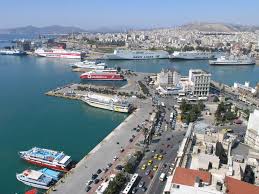
The
port city of Piraeus
and the ancient city of Athens,
initially inhabited around the holy rock of Acropolis, have virtually
amalgamated with each other to make twin cities where it is difficult to draw a
line between the two. The port at Piraeus
is important as shipping is the other most significant industry besides
tourism. Greece
has 3000 merchant vessels constituting 18% of the world’s fleet. Though the
revenues are gradually diminishing the Greeks still profit handsomely from maritime
trade. Aristotle Onassis, the Greek shipping magnate who shot to fame after
marrying the widowed Jacqueline Kennedy, after the assassination of US
president John F.Kennedy, was a man with staggering wealth to his name. Besides
Aristotle Onassis Greece has to its credit the all time great philosophers like
Aristotle, Plato and Socrates.
The
Greeks claim that ancient Athens
is the city with most glorious history in the world. It is a magical city
worshipped by gods and people. It is an enchanting capital where democracy as
well as the most wise men of ancient times were born. It is their country. They
have a right to make any claims and there certainly is a fair bit of substance
to their claims.
The writer is a
dental surgeon and can be reached at: dsq006@gmail.com
 As a rule I have been visiting places by choice but at times it was, I may say, by compulsion. Damascus was one such destination which was never on my ‘hit’ list but I visited it on the invitation of a Syrian friend. Although historically important, the place had never fascinated me. The visa was no problem and I was received at the airport by my friend. We drove straight to his house in central Damascus where he enhanced his credentials like a good host.


